Goal setting
Bob Proctor's goal card, made visual
5 min read · Updated

KEY TAKEAWAYS
- Bob Proctor's goal card: one goal, in the present tense, read many times a day.
- Specific goals with a date beat "do your best" (Locke and Latham).
- Tracking your goal and progress helps, most of all when it's written down (Harkin and colleagues).
- Add a picture and the steps, and keep it on your phone so it never gets lost.
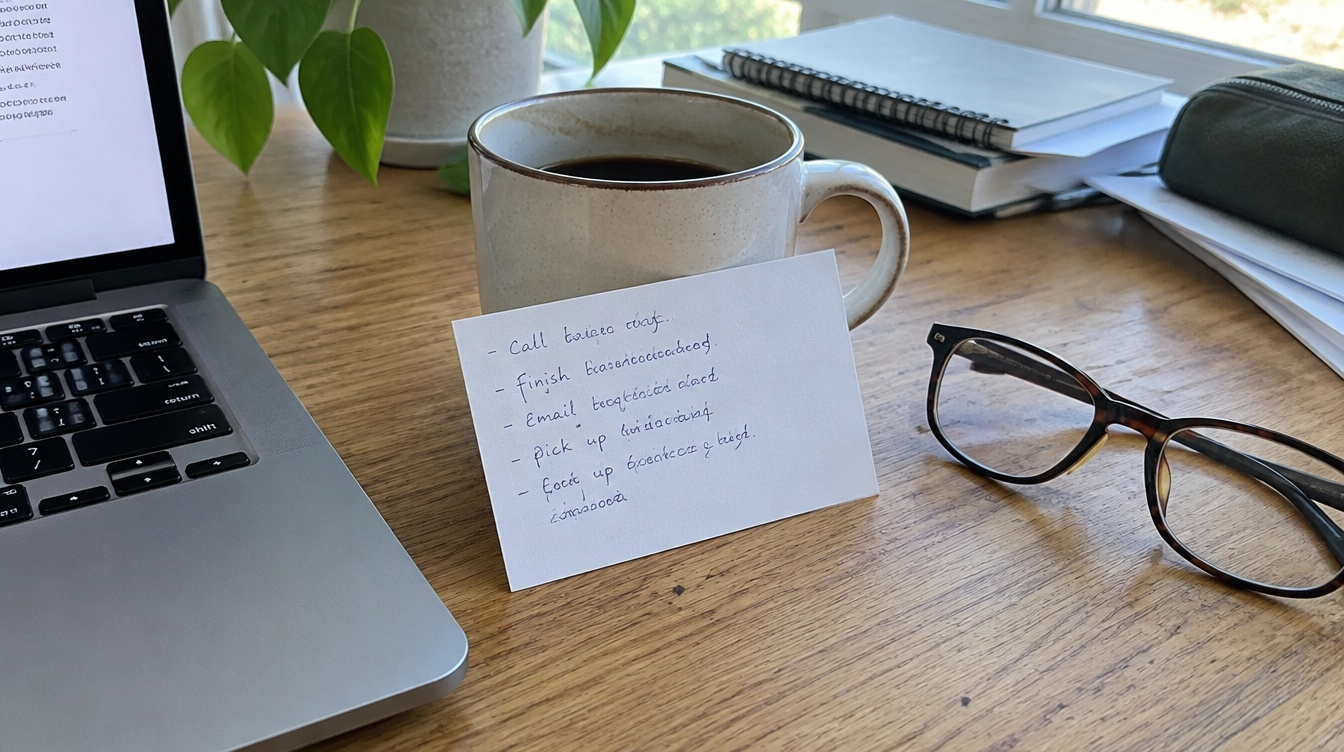
Bob Proctor carried a small card in his pocket for decades. On it: his goal, written as if it had already happened. He read it in the morning, at night, and many times in between.
Many people learned the idea from him. Most tried it for a week, then lost the card in a coat.
Here's what the goal card gets right, what research says, and how to make a version you won't lose.
The card was never the magic. Reading it every day was.
Who was Bob Proctor?
Bob Proctor was a Canadian speaker and author on personal development. Many people know him from the film The Secret (2006) and his book You Were Born Rich. He taught for more than 50 years.
His goal card is one of his simplest and most-copied ideas.
What is a goal card?
A small card with one goal on it, written in the present tense. Proctor's version often starts with: "I am so happy and grateful now that…"
You carry it with you and read it many times a day. The goal stays the first thing on your mind, not the last.

Everything in sight. On one board.
Tasks, notes, photos and plans as cards on one calm board. No charge today. Cancel anytime.
Start 7 days freeOr see all templates →Why does writing a goal down help?
Writing forces you to be specific. And specific goals work better.
Goal researchers Edwin Locke and Gary Latham looked at decades of studies. Their conclusion: clear, challenging goals lead to better results than a vague "do your best".
"Get fit" means nothing when you read it every morning. "Run a 10k by autumn" does.
Does reading it every day really matter?
The repeating is the clever part. A goal you read often stays in view, and research says that helps.
A review by Benjamin Harkin and colleagues combined 138 studies. Keeping track of your goal and your progress made people more likely to reach it, especially when it was written down.
What's missing on a paper card?
Three things:
- It gets lost. In a wallet, a coat, a drawer.
- It has no picture. You feel a picture faster than you read a sentence.
- It has no steps. It tells you where, not what next.
How do I make a visual goal card?
Put two cards side by side on one board.
1. A vision card: the feeling. One photo, one line in the present tense. This is Proctor's sentence, with a picture.
2. A goal card: the how. The goal with a date, where you are now, why you want it, the milestones and this week's actions.
Read the vision card for the feeling. Read the goal card for the next step.
How do I write a good goal card?
- Specific: what exactly?
- Dated: by when?
- Present tense: as if it's already true
- Why: one line for tired days
- First step: something for this week
When should I read it?
Proctor said: often. Start with two moments that are already part of your day.
- Morning: with your first coffee. Read the vision card slowly.
- Evening: before bed. Read the goal card. What's tomorrow's step?
Because it's on your phone, you don't have to remember to carry it.
How many goal cards should I have?
Fewer than you think. Three is plenty for a season. Ten goal cards is a list, not a focus.
What does it look like on one board?
Each goal gets a picture and a goal card, side by side. Add a habit card to tick off the days you read them.
Your goal card in 10 minutes
Screenshot this.
- Pick one goal.
- Make it specific, with a date.
- Write it as if it's already true.
- Add one photo.
- Add the why and this week's step.
- Read it morning and evening.
Write your goal card tonight. Read it tomorrow with your coffee.
Questions
What is Bob Proctor's goal card?
A small card with one goal written in the present tense, often starting with 'I am so happy and grateful now that…'. You carry it with you and read it many times a day.
Does writing down goals really work?
Writing a goal makes it specific, and specific goals lead to better results (Locke and Latham). Tracking progress in writing also helps (Harkin and colleagues). The often-quoted '42% more likely' figure is not from a peer-reviewed study.
How often should I read my goal card?
At least twice a day: in the morning for the feeling and in the evening to pick tomorrow's step.
Can I make a goal card on my phone?
Yes. Put a vision card with a photo and one line next to a goal card with the date, the why and the steps, so it is always with you.
How many goal cards should I have?
Three is plenty for a season. More than that turns focus back into a long list.
Sources
- Proctor Gallagher Institute — official site
- Locke, E. A., & Latham, G. P. (2002). Building a practically useful theory of goal setting and task motivation: A 35-year odyssey. American Psychologist, 57(9), 705–717.
- Harkin, B., Webb, T. L., Chang, B. P. I., et al. (2016). Does monitoring goal progress promote goal attainment? A meta-analysis of the experimental evidence. Psychological Bulletin, 142(2), 198–229.
Try it on your own board.
No charge today. Cancel anytime.
Start 7 days free