Family
The mental load: what moms keep in their heads
7 min read · Updated

KEY TAKEAWAYS
- The mental load is noticing, remembering and checking the tasks of running a home, not just doing them.
- Research by Allison Daminger found anticipating and checking fall much more on one partner, usually the mother.
- "Just ask me" still leaves the thinking with one person. Real sharing hands over a whole area.
- Write everything down, split by area, and keep it on one board you can both see.
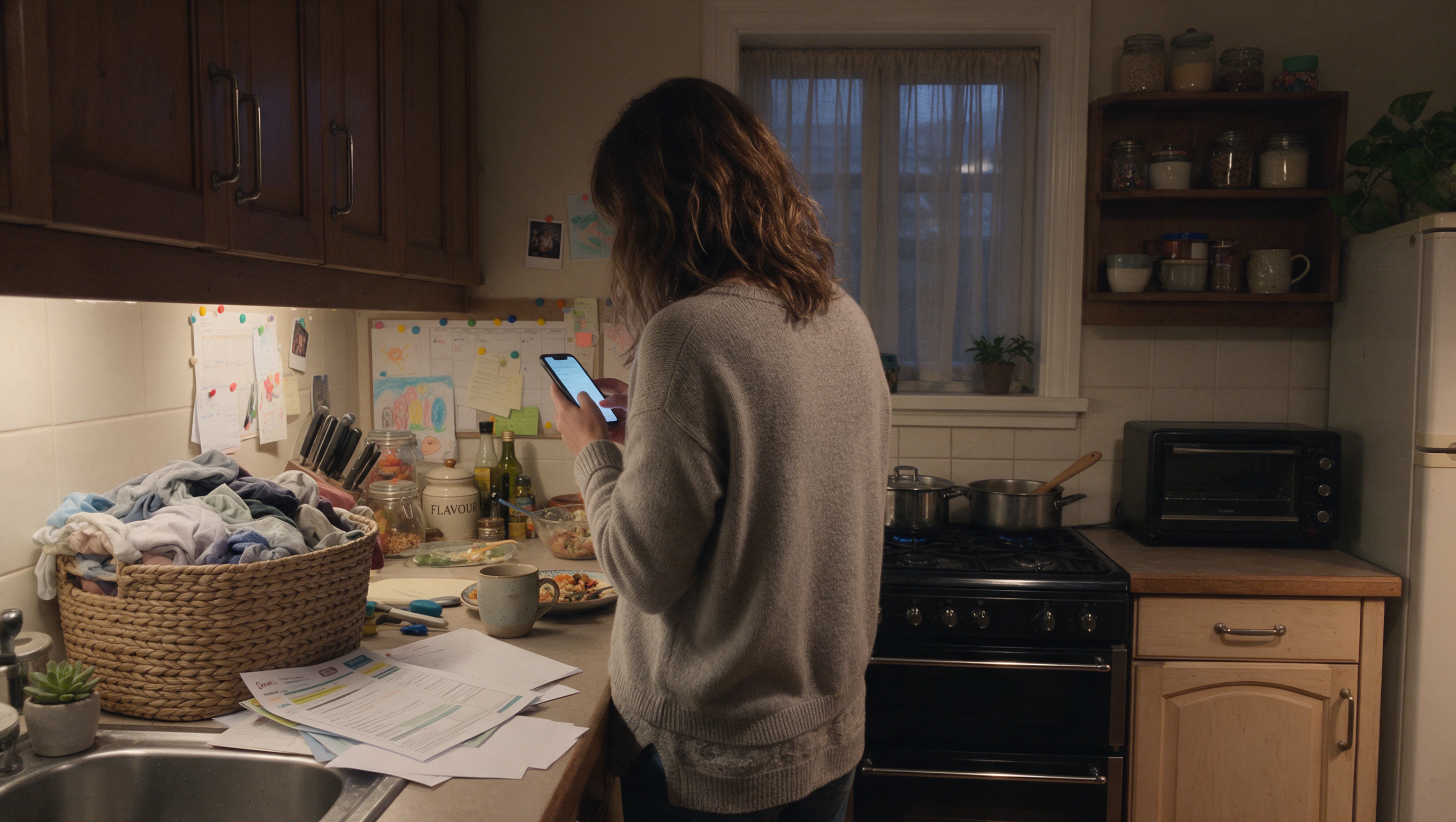
It's 11 pm. You're in bed. And your head is still running:
Swimming bag. Grandma's birthday. The form for school. We're out of rice. Did anyone book the dentist?
Nobody asked you to remember all of this. But somehow, you do.
"I can't remember all of this." And yet you do. Every day.
What is the mental load?
It's the invisible part of running a home. Not doing the tasks, but noticing they need doing, remembering them, and checking they got done.
Sociologist Allison Daminger studied this in 35 couples. She split the thinking behind housework into four steps:
- Anticipate: seeing what's coming
- Identify: working out the options
- Decide: choosing one
- Monitor: checking it happened
The deciding was often shared. But anticipating and monitoring, the parts that never switch off, fell much more on one partner. Usually the mother.
Why is it so tiring?
Because it never ends, and nobody sees it.
- It has no hours. It runs at work, in the shower, at 11 pm.
- It's invisible. You can't see someone remembering.
- It's hard to hand over. "Just tell me what to do" still leaves you doing the thinking.
Being asked "what can I do?" is kind. But it still makes you the manager.

Everything in sight. On one board.
Tasks, notes, photos and plans as cards on one calm board. No charge today. Cancel anytime.
Start 7 days freeOr see all templates →Why doesn't "just ask me" solve it?
Because asking is the mental load.
If you have to notice, decide and then ask, you've done three of the four steps. The other person only does the last one: the task itself.
Real sharing means handing over the whole thing, from noticing to checking.
How do we really share it?
1. Get it out of your head. Write everything down. All of it: tasks, dates, things to buy, things to check. Seeing the list is often the first time a partner understands how big it is.
2. Split by area, not by task. Not "can you buy the swimming bag?", but "swimming is yours": the bag, the schedule, the fees, the pick-ups. From noticing to checking.
3. Put it where both of you can see it. One shared board with dates, contacts, the week and the shopping. Then "did you…?" becomes "it's on the board".
What areas can you split?
Some examples that work for many families:
- School: forms, trips, parents' evenings, lunch money
- Health: dentist, doctor, check-ups, medicines in the house
- Food: meal plan, shopping, school lunches
- Birthdays and presents: family, friends, kids' parties
- The house: repairs, bills, the person who comes to fix things
What goes on the board for each area?
The things you'd otherwise keep in your head:
- Dates: when, with a reminder
- Contacts: the sitter, the school office, the GP
- The next step: one line, with a name
How do we keep it up?
A short weekly moment. Ten minutes on Sunday: what's coming this week, who has what.
It's the same routine as in the Sunday reset. For the family version, read stop being the family's calendar.
The full family board
Your mental-load reset
Screenshot this:
- Write down everything in your head, all of it
- Split by area, not by task
- One owner per area, from noticing to checking
- One shared board both of you can see
- Ten minutes together every Sunday
Tonight, write down everything you're keeping in your head. Show it to your partner. Just show it.
Questions
What is the mental load?
The invisible work of running a home: noticing what needs doing, remembering it, deciding and checking it got done, on top of doing the tasks.
Why does the mental load fall on mothers?
In Allison Daminger's research, the anticipating and checking parts of household thinking fell much more on one partner, usually the mother.
How do couples share the mental load?
Write everything down, split responsibilities by area instead of by task, and give each area one owner from noticing to checking.
Why doesn't asking my partner to help fix it?
Because noticing, deciding and asking is already most of the work. Sharing means handing over the whole area, not single tasks.
Where should we keep the family to-dos?
On one shared board with dates, contacts, the week and the shopping list, so both partners see the same plan.
Sources
Try it on your own board.
No charge today. Cancel anytime.
Start 7 days free