Focus
Why you lose track: your brain holds about four things at once
6 min read · Updated

KEY TAKEAWAYS
- Working memory holds about four chunks at once, not seven (Cowan).
- When you try to remember too much, things slide off: you lose track, switch and lie awake.
- Storing information outside your head, called cognitive offloading, frees your mind (Risko and Gilbert).
- Keep three things on today and everything else on one board you trust.
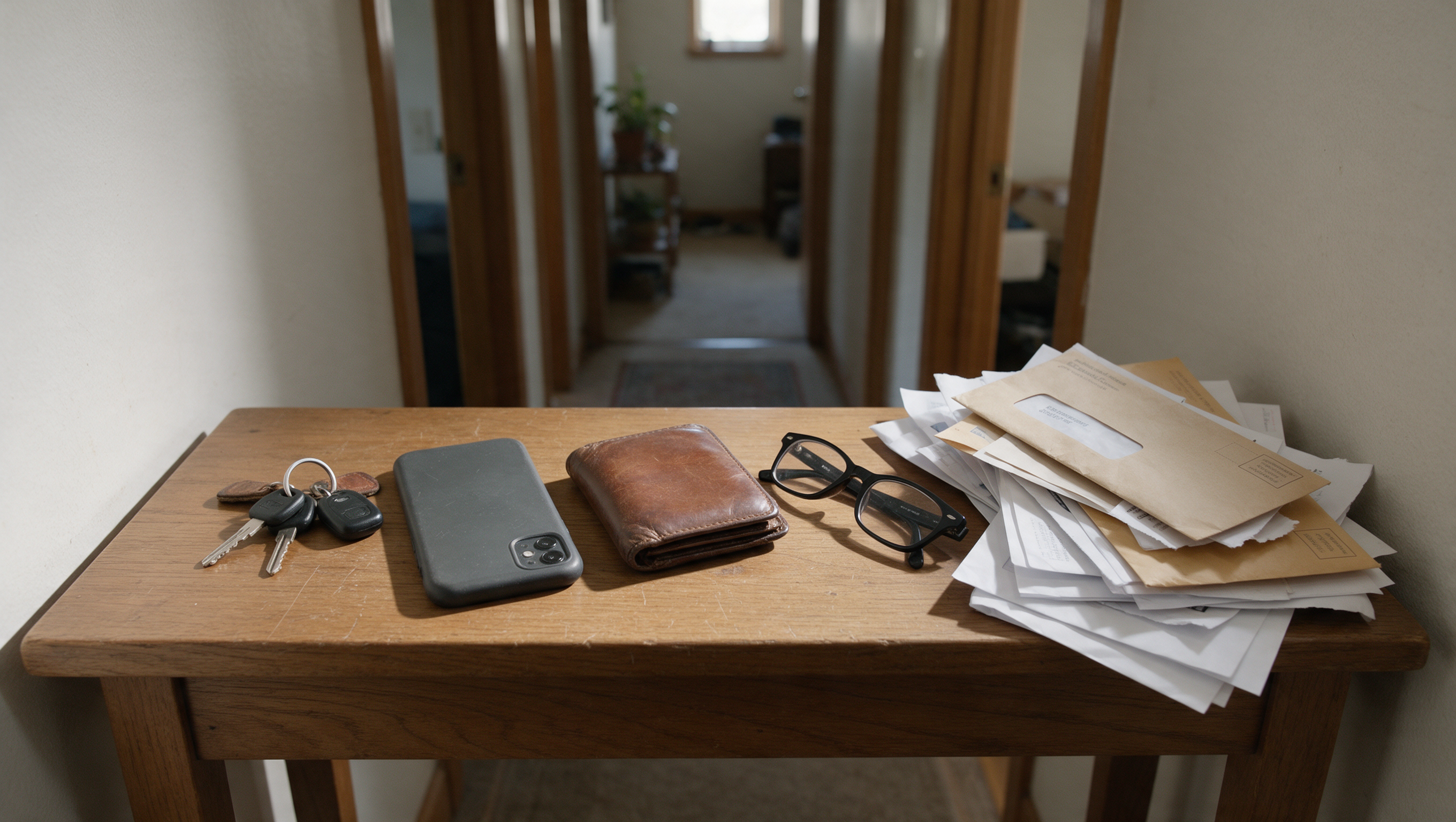
You walk into the kitchen and forget why. You start a reply and remember another email halfway. You were going to call someone today. Who was it again?
You're not forgetful. You're overloaded.
How much can your head hold at once?
Less than you think. About four things.
You may have heard "seven, plus or minus two". That number comes from a famous 1956 paper by George Miller. Later research, summed up by psychologist Nelson Cowan, suggests the real limit for what you can actively hold in mind is closer to four chunks.
Four. That's your mental desk. Everything else falls off.
Your memory is a library. Your working memory is a small desk.
Why does that make you lose track?
Because modern life asks for far more than four:
- Today's tasks
- This week's appointments
- Messages to answer
- Things you promised
- Ideas you don't want to lose
- What's for dinner
Each one you try to "just remember" takes a spot on the desk. When something new arrives, something else slides off. Not because you don't care, but because there's no room.
Everything in sight. On one board.
Tasks, notes, photos and plans as cards on one calm board. No charge today. Cancel anytime.
Start 7 days freeOr see all templates →What happens when the desk is full?
You feel it as:
- Restlessness: a vague feeling you're forgetting something
- Switching: starting one thing, remembering another
- Late-night lists: your head going over everything when you're trying to sleep
How do I take things off the desk?
Put them somewhere you trust. Researchers Evan Risko and Sam Gilbert call this cognitive offloading: storing information outside your head so your mind is free for thinking.
The key word is trust. If you don't trust the place, your head keeps holding it "just in case".
A place you trust is:
- Always with you: on your phone
- One place, not five apps
- Visible: you see it without searching
How many things should be on today?
Three. That leaves one spot free for whatever comes up.
The rest lives on the board: this week, waiting on, later. Visible, but not on your desk.
Why does seeing it help?
Because when everything sits in front of you, your brain doesn't have to rebuild the picture every time. You look, and you know where you stand.
More on that: why seeing beats remembering.
The full board
Your clear-desk routine
Screenshot this:
- Your head holds about four things, not forty
- Three things on today, one spot free
- Everything else on the board, in one place
- New thought? Write it down, let it go
- Look at the board, don't rebuild it in your head
Right now, write down everything you're trying to remember. See how your head feels after.
Questions
Why do I keep losing track of things?
Your working memory holds only about four things at once. When you try to remember more, things slide off, even when you care about them.
Is working memory seven items or four?
The famous seven plus or minus two comes from Miller in 1956. Later research summed up by Nelson Cowan suggests about four chunks.
What is cognitive offloading?
Storing information outside your head, like on a list, card or board, so your mind is free for thinking instead of remembering.
How many tasks should I plan for today?
About three, which leaves room for whatever comes up. Keep everything else visible but separate.
How do I stop forgetting things?
Write things down the moment they come up, in one place you trust and see every day.
Sources
- Cowan, N. (2001). The magical number 4 in short-term memory. Behavioral and Brain Sciences, 24(1), 87–114.
- Miller, G. A. (1956). The magical number seven, plus or minus two. Psychological Review, 63(2), 81–97.
- Risko, E. F., & Gilbert, S. J. (2016). Cognitive offloading. Trends in Cognitive Sciences, 20(9), 676–688.
Try it on your own board.
No charge today. Cancel anytime.
Start 7 days free